MAR
CALIfornia
Mar is based in California. “At any given moment I`d be better high”.
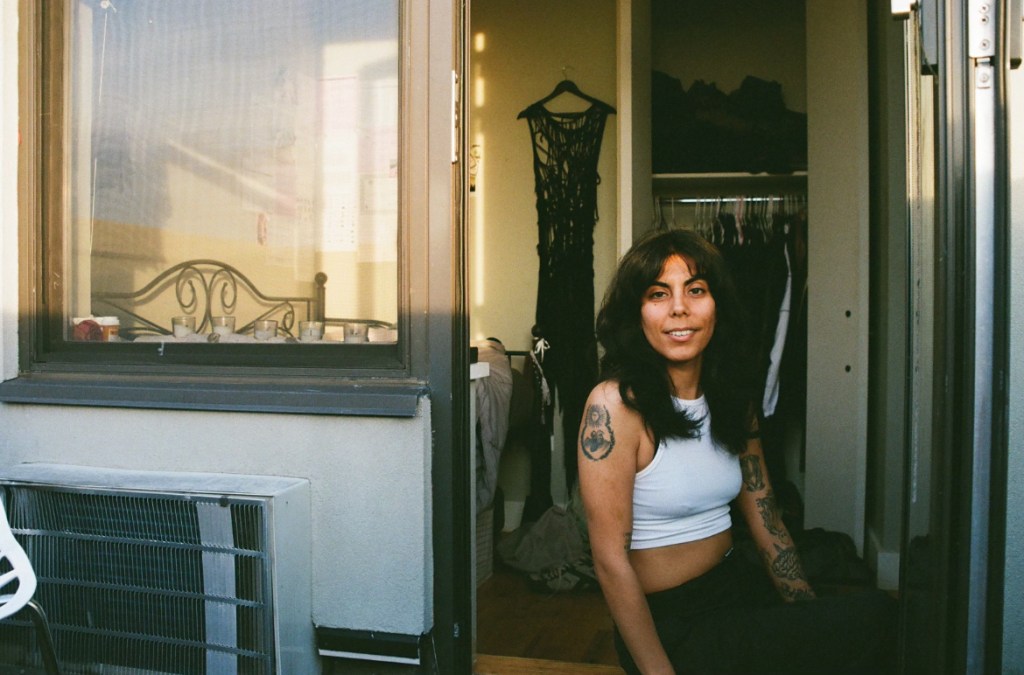
Selected quotes:
“[When I started using] I became a different person, it felt like there were different possibilities in the world. I could imagine different things. I could see different futures. I think that was like nothing I had ever felt before, you know, as someone who was growing up in poverty, didn`t have access to very many different resources, or to social mobility or class mobility, to be able to have an experience where I felt it would be possible for me to just feel good, to live in a world where I’m not feeling miserable all the time or hurting all the time.”
“[Drug use] opened me, and the people I was using with, up to connection and communities of care that were so much more radical than I had ever known. … Drug use is another way, another aspect of identity, like being poor, like being Brown, like being othered in many ways, that allows for a refusal to be governed and to play with the spectacle of control and discipline. … [with drug use] the body starts to feel like a place of revolution, right? A place where you can blur the lines and blur the boundaries of control. For me, it was like the self, and the individual became kind of unrecognizable. It was like a reckoning with autonomy. … I began to really question and reckon with questions of race and class and gender and sex and queerness and love and care and the way that that shows up and what that feels like … and what revolution and liberation could feel like”
“I think the conversation sometimes feels like liberation is an end goal or like we’re striving to get there or we’re working towards that. … [But] there were moments, especially when I was using heavily and thinking about all these things and talking to people and surrounded by people who are also using, it became clear that liberation and autonomy can exist and are already in action and all around us. These concepts are not so out of reach and impossible.”
“I was using meth [which] feels like maybe one of the more stigmatized or `harmful` drugs, if you will, and I felt like the best I had ever felt in my life. … it’s really hard to marry the idea that this is a bad thing, this is a bad drug, it’s gonna like ruin your life, … that meth has ruined all these people’s lives and people are in poverty and people are bad and have committed violent crimes, [that] they’re doing it to themselves or they’re like under control of this chronic brain disease. … And then you experience it yourself and it challenges all of that. … it’s really hard to be a person who like to use drugs, to know that experience, the embodied experience, the physical sensation, the emotional, like spiritual experience of using drugs and being in community with people who use drugs and also being surrounded by people who have not questioned the nuance of the propaganda or the stereotypes around drug use”
“The criminalization of drug use is so new and so tied to the nation state and especially late-stage capitalism … it’s impossible to understand these things as separate … using drugs and plants and substances has been historically a thing forever … in a lot of indigenous communities, plants and drugs are not seen as a means of control … a lot of these drugs are just seen as medicinal plants. They are very healing and eye opening. They’ve always been used as long as Earth has provided them. The Earth grows our food that we eat, how are drugs any different?”
“The concept that it’s the drug itself that is causing harm and violence and death and killings, when [really] the reason the drugs become so unsafe or biologically harmful is because they are criminalized, because they’re not allowed to be circulated, to be mobile in a natural kind of way”
“[There is a] dissonance between using drugs and knowing the liberatory power of using and being in community with people who use and letting yourself slip through the boundaries and the borders of everything that we’ve been told, like the borders of control … but also being like being forced to be so aware of the violence from the nation state, from all these imposed borders and boundaries. It’s really hard knowing that the point is to have us feeling so hopeless and devastated and so full of grief and sorrow that we cannot imagine a different reality … [But] you talk with other drug users and other people who are at the borders and boundaries and pushing the borders and boundaries of what reality can look like … [you begin to imagine a reality] where there is a safe drug supply, where there is an ability to be free or an ability to be liberated from all the systems in place controlling us”
“At the same time as we’re seeing hyper criminalization of drug use, of poor people, Black people, Brown people, undocumented people … I see a rise in care. People are being caring more and more and are organizing more and more with one another, with the feeling and the need for something more, something different”
FULL INTERVIEW (ENGLISH):
 Labor of Love: A Global Harm Reduction Oral History Project