Aura
Barcelona, Spain
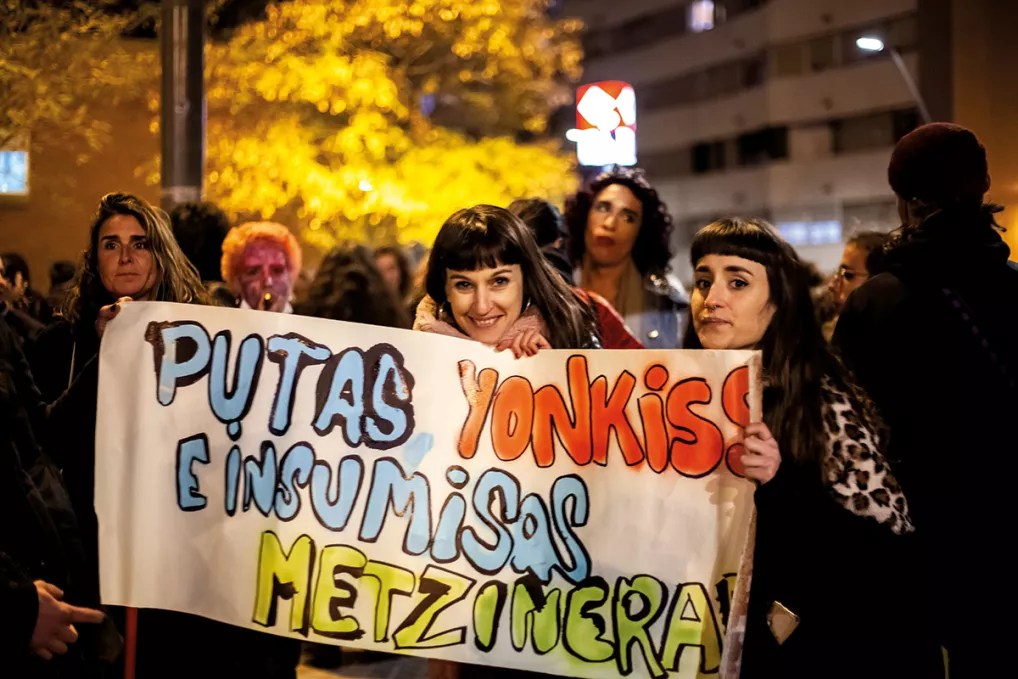
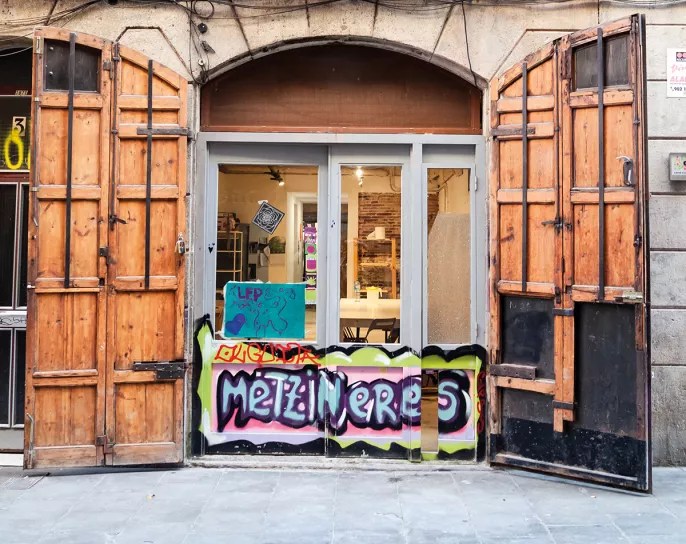
Aura is the founder of Metzineres, the first non-governmental organization and community center for womxn and gender diverse people who use drugs and are violence survivors. Aura is a researcher and advocate who has worked in Spain, the USA, Canada, Columbia, Costa Rica, and around Europe.
Selected quotes:
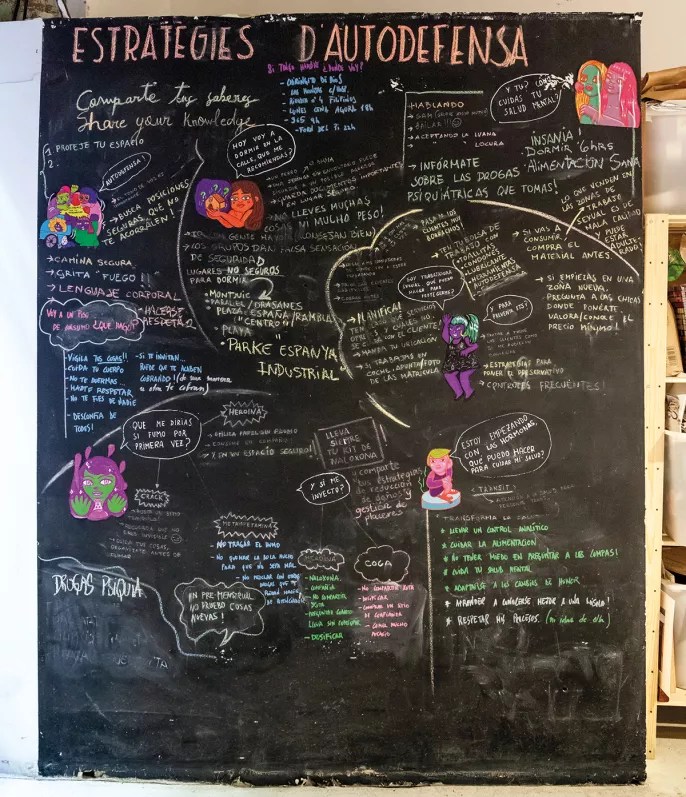
“I had the chance to move to Vancouver to work. I thought that I was going to work at Insight. But when I arrived there, they told me, before you work at Insight, you need to understand what harm reduction is about. Because harm reduction is not about drugs. … I began to see these housing first buildings, hospitals to recover after a surgery where you can use drugs and you can stay there with your partner. I began to see that a community garden can be harm reduction. I began to see how harm reduction is not about drugs. It’s about mental health, housing, it’s about gender. It’s about all of this stuff together. And the drug use is just in a small part.”
“It’s true that the people in Barcelona are still alive, but they’re not living, they are surviving. … We are not giving a solution. We are chronifying the situation of violence. Then it was clear that for womxn it was even worse because there were not any places where they could go and see their friends and share their realities. Then when we began to meet every week with these womxn, we saw that, for the first time, they were sharing stories. They were sharing strategies for survival. They were building solidarity for the first time. … This was the beginning, like how we built Metzineres. We built Metzineres from this network of women who use drugs. … at some point we had the chance to open a place, and it’s how we began. It was in 2016 and now we have 600 women.”
“We have a strong network of harm reduction services [in Barcelona], but women are not arriving there … Because, of course, they represent just 15% of the total population using harm reduction services. Harm reduction services don’t have gender perspective. They are not safe for them, you know. And I will say that also they have this medicalized point of view, where I am like, I think we need to begin from another place. If I want to use drugs, I don’t want to go to a place where I’m going to have a nurse telling me what I have to do, or what I can do, or that I cannot share with my friends … it is too artificial.”
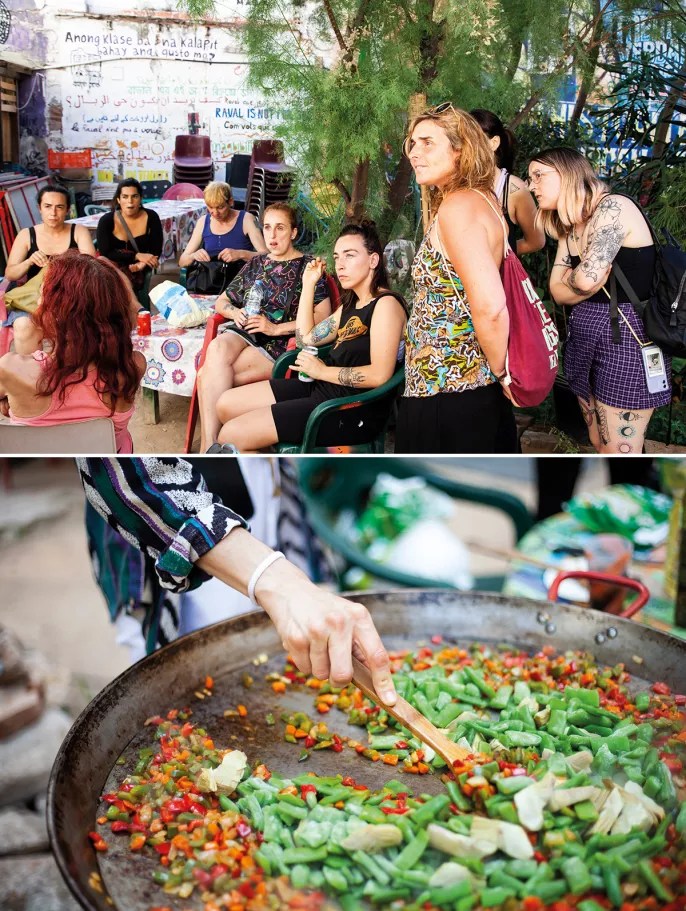
“[With Metzineres] we decided to open a place that was more a social space. … We introduce ourselves as neighbors. We are part of the community, and we really put a lot of effort to make sure that we are part of the community. … We decided that we wouldn’t call our place a consumption room. [But] of course, you can use drugs in our place, like you can use whatever drug you want. … We were super clear from the beginning that we were not service providers. We need to provide services because if you want to fight for your rights, of course, if you don’t have your basic needs covered, it’s really difficult. But our goal is not your basic needs, it’s to fight for your rights. … We always were clear that we were not here just for drugs or from an individual point of view, but from a community one to fight against the structural causes of inequality and violence”
“I don’t like to talk about peer workers because from an intersectional feminist perspective, who the fuck is peer and who the fuck is not? … [PWUD] knowledge is not about their direct use, you know?”
“I don’t want just to be super critical [of institutionalized harm reduction], because we need to understand that, at the end of the 80s, Barcelona was the city with higher rates of overdose and higher rates of HIV. The first thing was we need to save lives. … Catalonia decided to listen the experts. They organized people who use drugs, [who] began to talk with the government to make sure that all these tools like needle access programs, DCRs (drug consumption rooms), were included [in their plan to address the HIV/AIDS crisis] … [These activists] really understood what harm reduction was. They were talking for their friends. They were losing their friends. They were looking for [institutionalization]. Institutionalization was super important because the overdose rates and the HIV infection dropped off dramatically. But what happened 30 years later? These services, little by little, became more a social control tool. They have been used also as a social control tool from the beginning. The DCRs here didn’t open just because people were fighting for it. They opened up because we have the Olympic Games. They opened because Barcelona wanted gentrification. … it’s a complex thing”
“We were able to open Metzineres as we did with the support of the Catalan government because we had a DCR. Everybody understands what the DCR is. … I don’t need to defend that idea anymore. … [but] we had opposition when we began to do the things differently. And when people realized that we were not talking just about women, that we were talking about another perspective of harm reduction. When we were beginning to say, okay, we cannot sanction anybody, … when we say to the people, now you can use here, and you can use with your friend. I understand that you need to use with your friend. … when we began to do that, everybody was like, but why? We have protocols. I was like, fuck the protocols.”
“Then my enemy in that sense is not the institutionalization of the harm reduction, because I also understand that for some people, they prefer a medicalized consumption room. … But I also know a lot of people that don’t feel comfortable there, [and] we need also to have more. … for me, the solution is not individual. … when I am in trouble, I look for my friends. I look for my community. [With] Metzineres we work for building a feeling of belonging, a community that you feel care, that you feel safe. We do therapy, we go to the theater, we go to dance, to a concert, because for people who never had love or never had this kind of community where they feel free to go to the beach and be naked in the fucking beach because they are safe being trans. It’s the first time that they can be in a beach and they don’t give a fuck if somebody says anything because they’re going to have like 20 other women saying, what the fuck are you talking about? And for me, this was the kind of treatment that was more important, not even the consumption room.”
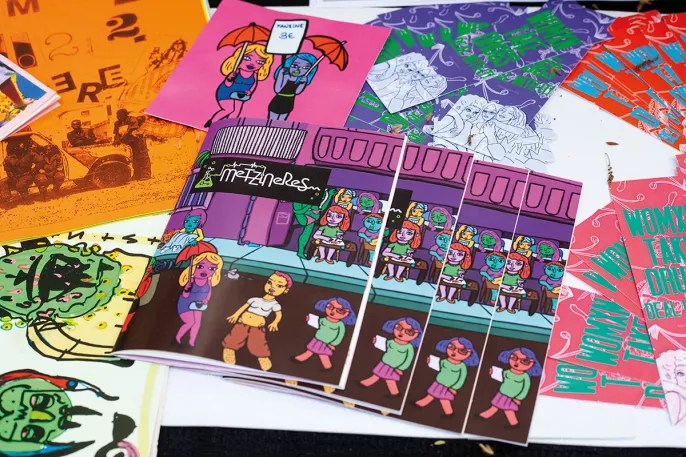
“When we talk about the War on Drugs, normally we talk about the Opium War, but when we see it from a feminist point of view, we go to the Metzineres. They were these women in the Middle Ages that were using plants, drugs, as remedies and poisons, but also as a way to understand the health or well-being of the community in a different way. … [These] women were the caregivers of the community. They were not separating physical health from emotional health. [Then] the church came and [enforced] morality. And then pleasure wasn’t going to be part of well-being anymore because the church is saying that this is forbidden. And at the same time, men come and say that the knowledge of these women is also forbidden. And that this knowledge belongs to doctors and pharmacists who are men–[who] see health in the individualistic point of view and not anymore about the wellness of the community. It’s about the lack of pain and the lack of illness. Pleasure is not part of the equation anymore. [They] took away all this fucking knowledge about sexual and reproductive health and around connection with drugs … And now, everybody’s talking about MDMA for PTSD, or everybody’s talking about ketamine for fucking depression. And everybody’s saying, oh, we need to do yoga more, you know, because we need community again. And it’s like, yeah, fuck you. We did this forever ago. … to recover the knowledge about drugs and how we can use drugs is a feminist issue. This is capitalism. This is fucking patriarchy. And of course, they don’t want us to know about drugs. Because knowing about substances means to know about pleasure, about pain, and that is a lot of power.”
PART 1 (ENGLISH):
 Labor of Love: A Global Harm Reduction Oral History Project